


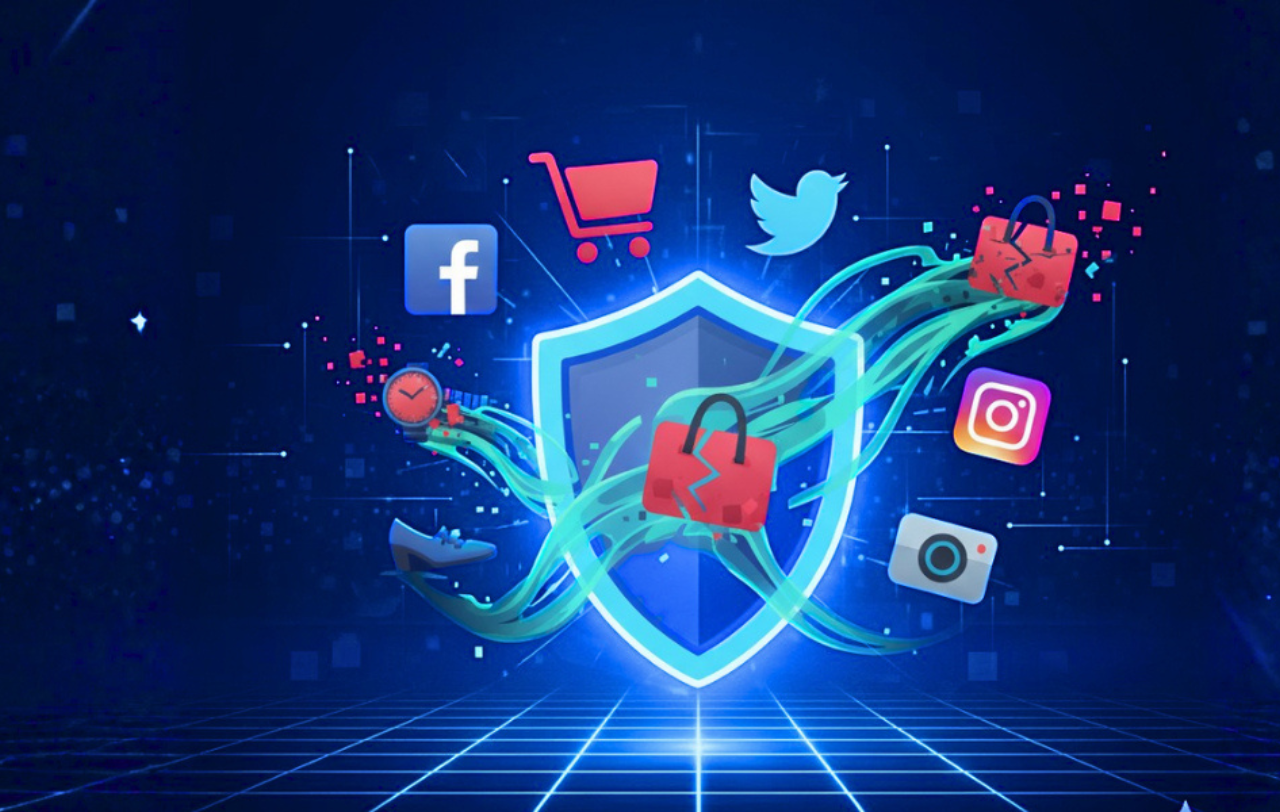
For most brands, social media started as a way to connect with customers. Today, it is also one of the biggest places where counterfeiters hide in plain sight. Instagram shops, Facebook groups, WhatsApp broadcast lists, Telegram communities and short video platforms have opened a smooth pathway for fake sellers to reach buyers quickly and quietly.
People see a product video, DM the page for price, get a discount, and place an order. Simple. Fast. And on the surface, harmless. But behind this simplicity lies a global issue that is costing brands millions every year.
How fake sellers secretly operate on social media
Counterfeiters do not behave like traditional sellers. They adjust fast and work in layers that make it difficult for brands to track. Here is how the ecosystem usually works:
1. Pop-up pages
Fake sellers create brand-lookalike pages using stolen photos, logos and product shoots. Once complaints rise, they vanish and reappear under a new name within days.
2. Private DMs to avoid detection
Prices and payment links are rarely shared publicly. Everything shifts to private chats to avoid automated tracking tools.
3. Cash on Delivery and UPI
Fake sellers often rely on COD and quick UPI payments. This increases customer trust and keeps money circulating fast.
4. Paid promotions and influencer tie-ups
Some counterfeiters run ads or partner with micro-influencers who unknowingly promote fakes. In many cases, creators do not run background checks.
5. Hidden WhatsApp groups and community sales
Buyers are added to broadcast lists that push new fake stock every week. Many of these networks are spread across multiple cities.
To a customer, it looks like a simple seller. To a brand, it is a hidden threat that keeps mutating.
Why social media counterfeits are growing so quickly
There is no single reason. It is a mix of easy reach, low risk and high profit.
- A fake seller can launch a page in 10 minutes
- Trend-based products go viral overnight
- Customers love discounts and limited stock tags
- Reporting and takedown systems on platforms are slow
The result is a perfect environment for counterfeiting to grow.
How this affects brands beyond just revenue loss
Money is the obvious hit, but the damage goes deeper.
Customers who unknowingly buy fakes blame the brand when the product is poor.
Negative reviews start piling up. Customer trust drops. Warranty and service teams get overwhelmed with requests for products the company never made. In the long run, a brand’s identity can slowly start eroding.
How brands can fight social media counterfeits effectively
There is no single magic solution, but when brands approach it systematically, the impact is strong.
Practical steps brands can take
- Monitor social media platforms daily through specialised tools
- Conduct test purchases to gather evidence and identify networks
- Document seller details, payment accounts and delivery routes
- File takedown notices ASAP before pages disappear
- Partner with professional anti-counterfeiting investigators
- Train internal teams to recognise counterfeit red flags
- Educate customers politely instead of blaming them
Every small step helps. The key is to respond early rather than after the damage has spread.
What BrandProCare sees in investigations
Through years of investigations, one pattern is clear. Counterfeiters almost always leave small traces behind. Payment screenshots, courier timelines, print suppliers, warehouse photos on profile, repeated usernames and even hashtags link them back to larger networks.
Once these dots are connected, brands can take strong actions such as:
- Mass takedowns across social platforms
- Police complaints backed with evidence
- Civil enforcement and injunctions
- Coordination with courier companies to block deliveries
A single seller takedown is useful. Breaking the full supply chain is powerful.
A quick advice for customers
Buying from unknown pages may seem exciting because of discounts. But if the page has no address, no customer support and only DMs for payments, there is a reason. It is better to buy from official stores, authorised retailers or verified online platforms.
Final thoughts
Social media is not the enemy. Counterfeiters are simply misusing the space. With the right mix of monitoring, evidence collection, customer awareness and legal action, brands can regain control. The sooner brands act, the quicker counterfeits lose strength.